
Menopause
In a world where information is at our fingertips, don’t let anything or anyone make you feel like the menopause transition is confusing. Dr. Rachel is trained to lay out everything you need to know from treating symptoms to reducing increased risk and working with your lifestyle to find you a sustainable treatment plan.
Menopause is one day. It is the day you reach 365 days without a menstrual bleed. Without a menstrual bleed we enter a state of minimal estrogen and progesterone production.
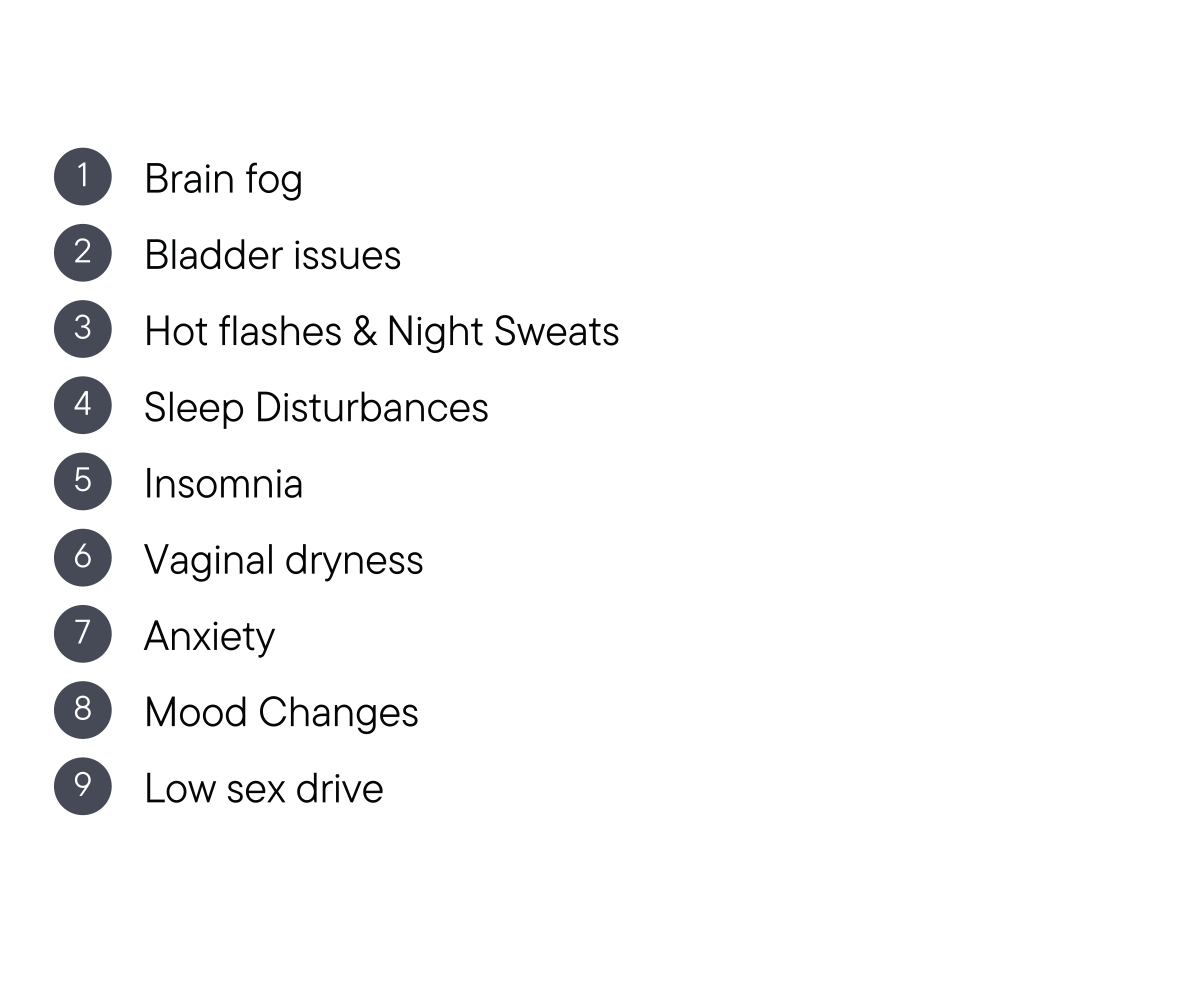
Symptoms of Menopause
 Risk Management After Menopause
Estrogen and progesterone are responsible for far more than a menstrual cycle, fertility and mood swings.
Loss of estrogen constributes to an increase in cardiovascular risk in women. Included in the risk are visceral adipose tissue accumulation, dyslipidemia, steep increases in total LDL and ApoB, sharp rises in systolic blood pressure, and increased subclinical atherosclerosis. This is a far larger conversation that menopause providing cardiovascular disease remains the leading cause of death in women.
The brain remains a vulnerable organ after menopause. There is a 16% prevalence of new-onset depression and/or anxiety during menopause transition in women without prior history.
Osteoporosis risk (loss of bone mass) increases during this time period. We believe this is likely due to loss of metabolically active muscle mass over this time period and we do see this risk reduce with the replacement of hormones.
Perimenopause
Symptoms of perimenopause
Heavy menstrual bleed/irregular cycle. During perimenopause hormonal fluctuations can be erratic, leading to vaginal bleeding that may be heavier than you are used to, or more irregular in timing.
Brain Fog. Over 60% of women report changes in their ability to think clearly, concentrate, remember, or make use of new information during the menopause transition. During the initial transition through perimenopause we see a change in short term memory where women feel difficulty learning. This typically resolves itself within the first 6 years after menopause indicating low hormones alone are not the only cause for this cognitive change.
Sleep disturbance. Waking up multiple times throughout the night is a common hallmark of perimenopause that may lead to excessive daytime sleepiness. This may be due to a sleep disorder, night sweats, restless leg syndrome or the need to wake up to urinate.
Change in mood. Perimenopause marks a window of vulnerability for a woman’s mental health. Women in Perimenopause have 3X the risk of a major depressive event regardless of previous history and 129% increased relative risk of being diagnosed with anxiety.
Online Perimenopause Depression Assessment Tool
Night sweats & hot flashes. Hot flashes are considered a cardinal feature of menopause and are almost universally experienced by women to some degree. Around 39% of women will experience the sudden onset of heat/sweating and flushing in the early stages of perimenopause, this percentage increases to up to 70% of women experiencing heat symptoms by late perimenopause.
Low libido. Hypoactive sexual desire Disorder (HSDD) is characterized by a persistent or recurrent lack of sexual fantasies and desire for sexual activity for more than 6 months. This lack of desire must be unrelated to treatable factors such as painful intercourse and you need to care that your desire has declined.
Perimenopause lab testing
Perimenopause is a clinical diagnosis, meaning your lived experience of your menstrual cycle changing and your age (45 or above) are enough to provide you both diagnosis and treatment.
However, I always perform additional testing patients below the age 45 and presenting with perimenopause symptoms as well as a baseline nutrient and risk screening for those with confirmed perimenopause
Testing I may suggest includes:
- LH & FSH
- Estradiol
- Anemia screening: CBC, ferritin, TSAT, Transferrin saturation
- Nutrient assessment: Vitamin D
- Thyroid assessment: TSH, free T4, anti-TPO
- Liver function panel
- Cardiovascular risk assessment: Lipid panel, CRP
- Diabetes risk assessment: fasted glucose, HbA1c
Hormone Replacement Therapy
Polyendocrine Metabolic Ovarian Syndrome
Diagnosis of PMOS
Diagnosis is simply a starting point for women living with PMOS. It is important to understand this is a lifelong syndrome with varying presentation from woman to woman.
A diagnosis of PMOS requires 2 of 3 criteria met
(a) ovulatory dysfunction (OD) which often presents as irregular menstrual cycles defined as a cycle of <21 or >35 days, from 3 years after menarche until perimenopause. Although ovulatory dysfunction can present with a normal cycle.
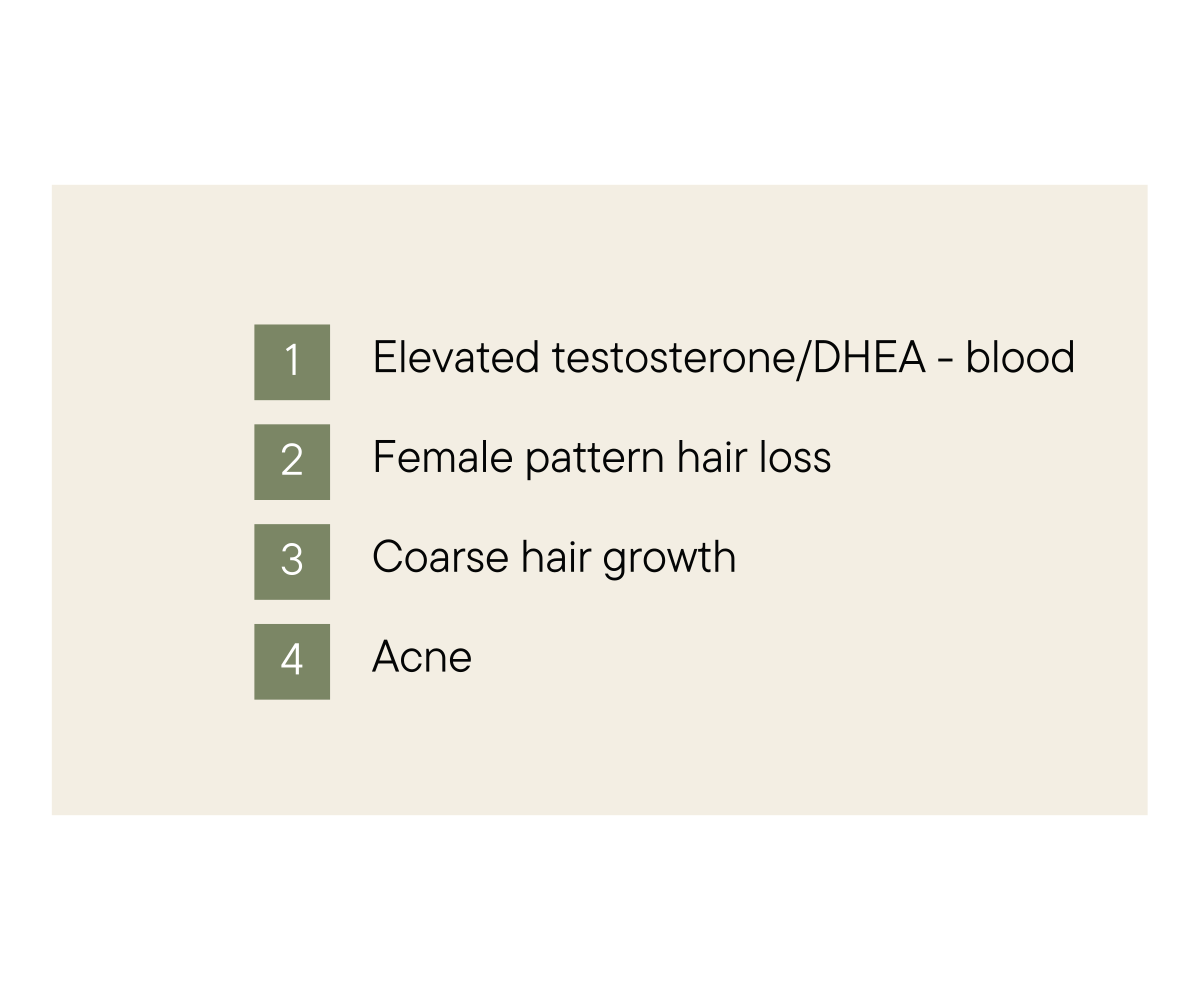
(b) Symptoms of elevated androgens or biochemical hyperandrogenism
(c) polycystic ovary morphology (PCOM) on ultrasound which requires an imaging requisition from your medical doctor
Plus: exclusion of other hormonal disorders which can be achieved through bloodwork
Laboratory assessments in PMOS
Laboratory assessments are unique based on each patient’s presentation of the syndrome. Below is a non exhaustive list of assessments considered.
Cardiometabolic assessment
- Fasting Glucose, Insulin and HbA1C
- Lipid panel (TG/HDL ratio)
- Inflammatory markers (CRP, CBC)
Hormone assessment
- Serum Luteal phase hormones to assess ovulation
- LH/FSH ratio
- AMH
- Serum androgens (total T, free T, calculated FAI)
- DHEA
- SHBG
Nutrient assessment
- Vitamin D
- Ferritin
Treatment of the PMOS triad 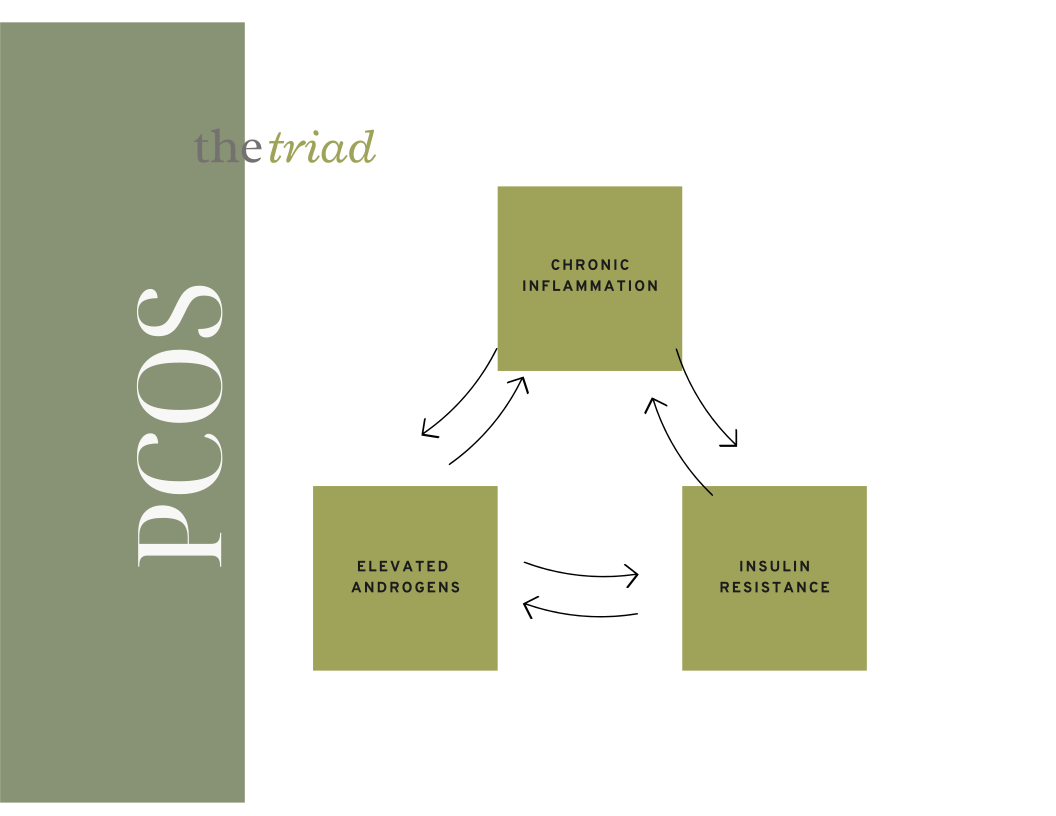
Endometriosis
Therapeutic Targets In Endometriosis
Options beyond progestins and hormonal contraceptives
PMS & PMDD
Pre menstrual syndrome
In Premenstrual Syndrome (PMS) mood symptoms are triggered by fluctuations in hormone levels, but not the levels themselves. In hormone based mood disorders, if we provide steady state hormones, and stop them from fluctuating the symptoms dissipate. Again confirming it is the fluctuations, that may even be normal fluctuations that are causing often debilitating symptoms.
Treatment involves management of a nervous system existing with a high level of reactivity.
Premenstrual Dysphoric Disorder (PMDD)
PMDD is characterized by the sudden onset of depression which may include irritability or anger in the final week before the start of the menstrual bleed. Symptoms must start to improve within a few days after the onset of menses, and become absent in the week postmenses.
In PMDD the story is slightly different than in PMS. We do see lower levels of estrogen in the follicular phase lead to a difficulty of the brain tolerating progesterone in the second half of the cycle.
I discuss with each of my patients which laboratory assessments may be valuable, as well as all treatment options ranging from pharmaceuticals to nutrition and supplementation.
Hormone Testing
Value is hormone testing changes per patient, in many cases we many test
- Follicular phase hormones: Estradiol
- LH
- FSH
- Vitamin D